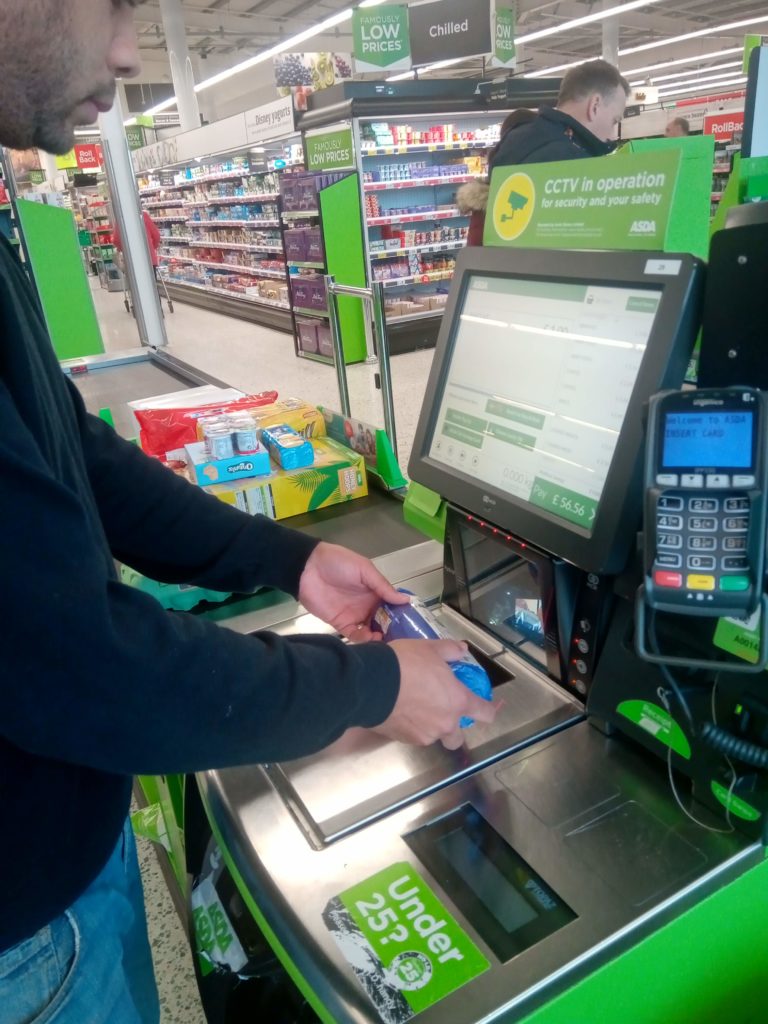
Used this self scan at @asda today to buy 50 items. Between my slowness and the software lag we counted 12 customers served in the same time it took me with roughly same or bigger trolley. Not quite the future of retail yet #retail #retailtech
Transformation: making a ruckus
Used this self scan at @asda today to buy 50 items. Between my slowness and the software lag we counted 12 customers served in the same time it took me with roughly same or bigger trolley. Not quite the future of retail yet #retail #retailtech
There are only three states of any business:
The first means close up shop so that’s assume that isn’t us.
Option two is where most cultural organisations sit and should be the initial focus for everyone. Either generate enough money to cover your running costs before your reserves or line of credit runs out and/or reduce your running costs until money in/out match. Its not the most comfortable place to be but perfectly respectable. Most of the folks I meet have 2-4 years to get to this magic number. A commercial business would have 90-180 days. Apply the 80/20 rule. where you apply 80% of your focus on the 20% that will offer the best way to get to the magic number. For example 20% of our retail products deliver approx 80% of our revenue. Same with venue hire customers.
Once you are able to meet budget you can then consider option three generating a surplus. Option’s two and three should be running in parallel where possible (see my thoughts on Scale elsewhere). Option three is about using any surplus to build the future – reserves, continuous improvement (that lead to further surplus of money or resource) and enabling activity not possible under the other conditions.
Most folks in the sector don’t write a business plan to know which of the three states they are in. Write it down. Use Seth Godin’s “The Modern Business Plan“.
Email can be important. A way to push a relationship or project one step further. To give thanks or stay in the loop. One of the best things I ever did was to assign time each day to my diary to “process” my email. If email is a part of your daily working life then give email the time it deserves in your day.
I assign an hour in the morning and approx 30mins in the afternoon. The time is just enough to keep moving forward, respond in a timely manner and keep work in my inbox not my head.
Once you learn to give email the time it deserves the next phase is to send better email.
Wednesday 23 October 2019
Title: The Changing Retail Landscape and how to succeed
To succeed you must be inspiring, innovating and trying new things all the time. Examples of three business doing this well are Harrods, Fortnum & Mason and Primark. Two words for success: “Be relevant”.
Ask yourself and your business to write four bullet points to show why you are relevant e.g:
Homework
His book is Almost is Not Good Enough ISBN 9781911195641
At work we sell approx 50 types of goods or service. We sell goods in our shops for example and our services include permitting, steam train rides, educational workshops and much more. Transactions none the less. I regularly get asked how to start a new revenue stream. For me the answer is simple for a good proportion of the time: Start by selling goods or services that people are already asking us for. Simple.
Case in point are the studios at M Shed. The original purpose was for the delivery of education activity. When not in use, staff would use the space for internal activity, meetings and the like. There was wriggle room for different uses. Any use that wasn’t the original intention or primary purpose I call a “by-product”. Sometime during 2015 we started to get enquiries for hiring a space that was smaller than our event suite. The event suite on the top floor was originally the only space for hire. We soon agreed with the learning team that they and us would both have access to the booking diary and use the space for education or private hire aka a new by-product. Every year since 2015 we have seen growth in the booking of this space which generates something like 5% additional revenue at this point. We didn’t transform or innovate, we simply responded to a user need and make a healthy stream of revenue.
What are people asking you for that perhaps could be the start of tens of thousands of pounds?
I regularly get emails from folks who have been instructed to get in touch with me to learn how I make money for our service. Firstly, it isn’t me making money. I help wrangle the conditions for our teams to do their best work and in turn revenue is generated. The services we provide are either designed to generate revenue OR making revenue is a by-product of something else we do. I’m sure that fancy business cases, spreadsheets and presentations work but I always start a simple question to my boss:
“What is the bottom line that you need from us?”
Once I have that single figure I can then set about to see how things need to change to respond to the goal. Better still I then internalise the goal as “how little can we afford to grow?“. Surely you’d think I would be always seeking the maximise right? wrong. Growing too much too quickly always has an impact on our resources. Sure we can sell more events but we would suddenly need to close public spaces in core hours which negatively impacts our public offer. I could insist our retail only stocked products in the £25+ region but alienate a large chunk of people who are in the £5-£25 region. The list of things I could do is endless.
So instead of having no constraints I prefer to have clear constraints grounded in walking a fine line of making money without stepping too far. Find out what is a sensible level of business by asking similarly positioned services to give you a benchmark. For example we need our retail to be in the 50p to £1 spend per head region, host on average three events per week and attract 400-500 filming days per year.
Grow by all means but not at any cost.
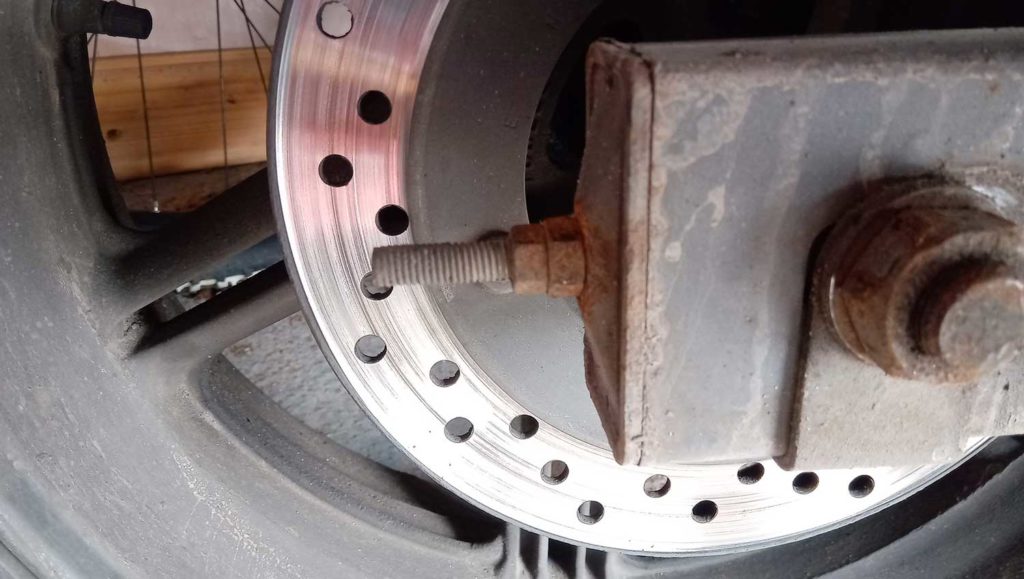
My motorcycle chain had become too loose and needed adjusting over the weekend. A friend came over to show me how to do it. The process was loosen the wheel nut (large nut in the above photo to right) , then first loosen the outer nut and then turn the second nut until the correct tension was found. What I found very interesting was the consideration Honda clearly had for us home fixers. Normally the two nuts would be the same size but most people own one spanner set with each tool being the next size down/up thus making it impossible to adjust the nuts at the same time. Honda have obviously considered this and to my surprise the second nut is the next size up thus allowing me to use the next spanner in the set and make the adjustment without having to borrow another spanner from a neighbour.
This small detail to me demonstrates how Honda have carefully considered the “real” world and met my user need before I even knew it. They could have used identical nuts knowing that would likely result in the user having to stop the job and seek out the same size spanner but instead they did the difficult work (two different nuts on the same sized thread and adding one more different part ). Thanks Honda!
Slides from my 16th May 2019 talk at Museums + Heritage show at Olympia London. Do get in touch if you have any questions.
Zak will show you how Bristol changed from being a museum service to a cultural business. A focus on delighting visitors and being data-informed has seen the team of teams rise to the opportunities of income generation in the face of big challenges.
During a trip to Manchester I took a few minutes to walkthrough the shop with the manager. This was an aside to the main reason for the visit but I spotted something immediately. Most of the products either weren’t priced or their related pricing point of sale wasn’t close enough. Hiding in plain sight was a big hurdle for the potential customer. It’s human nature to not ask staff about the price. Show me the price so I have as little friction as possible when considering a product.
Retail is 1000 little details like this.
The 22nd March 2019 officially marks the day our retail business revenue hit 100% growth since 2014-15 which you can see in the performance spreadsheet. A proud moment for the service. I want to kick-off by thanking the retail team who have worked their socks off and have been up for the challenge since day 1 in 2015. Also none of our success would be possible without the support of the other teams who contribute to the effort including Retail Thinking, user research, design & marketing, digital, documentation, programming and operations. Retail is a living breathing example of our team-of-teams approach to solving problems. Why try to do everything yourself when you have some of the best talent in other parts of the service willing to rolling their sleeves up.
Transformation is not easy but our goal has been to grow the business year on year using the four retail pillars of Buying, Staff skills, Visual merchandising (VM) and Performance. The Culture team need to make or save £436,000 between 2017-2021 as part of the wider Council savings programme. Retail is a core player in this growth.
A quick recap of the marathon to date:
2015-16
We expect our services to be the best they can possibly be in our sector. Not just better than before or better than our nearest comparable museums. We should be as good as the best of the best anywhere on the planet.
We have made over 300 changes to the retail business. We have made every mistake possible and will make more mistakes in the future.
In no particular order I present a number of key changes:
Do email me if you have any further questions, advice or want to come and visit at zak dot mensah at bristol dot gov uk
PS At the time of finalising these notes Nipsey Hussle on 31 March died. I am a big hip-hop fan and listened to Victory Lap lots throughout 2018/19 and find business tips/books/ideas from rap. RIP.